
Work and LifeFor readers in Ohio
A Home Workspace That Works, on a Budget
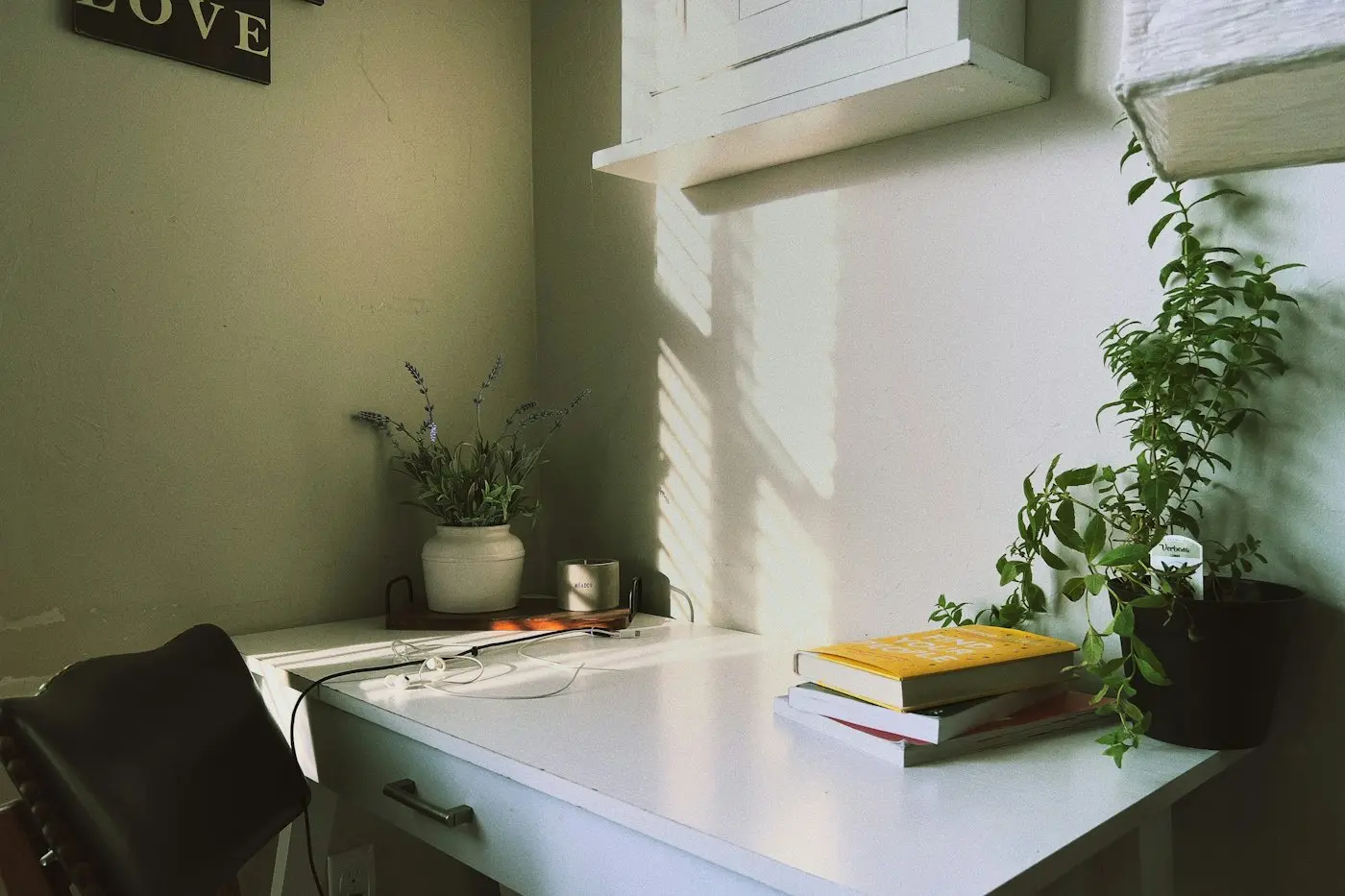
You do not need a spare room or a standing desk. You need good light, a decent chair, and a spot that tells your brain it is time to work.

Local snapshot
Ohio is home to more than 898,000 businesses with no employees. Yours could be next.
U.S. Census Bureau, 2022
Want to see what actually fits you? Answer a few quick questions and get your free matches.
A good workspace does one job: it tells your brain it is time to work. You do not need a spare room or expensive furniture to get there. You need a handful of basics done well, and most of them cost little or nothing.
Pick one spot and keep it
A corner of the bedroom, the end of the kitchen table, a small desk in the hallway. What matters is that it is the same place every time. After a week or two, sitting down there starts to switch you into work mode on its own, the same way a commute used to.
Get the light right
If you can, keep the window to your side rather than in front of you or behind you, which cuts glare on your screen. Natural light lifts your mood, cuts eye strain, and makes you look better on video calls. For evenings, a simple desk lamp with a warm bulb beats working under a single overhead light.
Spend on your chair before your desk
You can work at almost any flat surface, but a bad chair will find you by day three. Look for a used office chair with adjustable height and some lower back support. Until then, a cushion or a rolled towel behind your lower back is a surprisingly good fix. The Occupational Safety and Health Administration suggests exactly that as temporary lower back support.
Raise your screen
Hunching over a laptop all day is hard on your neck and shoulders. Raise the laptop so the top of the screen sits at or just below eye level, and at least 20 inches from your eyes, which is what federal workplace safety guidance recommends. Then add an inexpensive external keyboard and mouse. A stack of sturdy books works as well as a stand. Of everything on this list, this change pays off fastest.
A steady chair, a lamp, something to raise your screen, a basic keyboard and mouse, and a small box or tray to keep work things together. Most people can assemble this from what they already own plus one or two secondhand finds.
Set up a video call corner
If your work involves calls, test your camera view once. Put the light in front of you, raise the camera to eye level, and check what is behind you. A plain wall or a bookshelf reads as professional. A pile of laundry reads as a pile of laundry.
Keep it clear
End each day by putting work things back in their box or drawer. A clear surface makes the next morning easier to start, and if your workspace doubles as the dinner table, it keeps the peace.
Make it quiet enough
Perfect silence is rare at home. A pair of headphones, a white noise track, and a clear word with the household about your work hours will cover most of it.
What not to buy yet
Skip the standing desk, the second monitor, and the fancy microphone until your work actually calls for them. Buying gear feels like progress, but it is not the same thing. Once you are earning, upgrade one item at a time, starting with whatever bothers you most. Your workspace should grow with the work, not ahead of it.
The desk is the easy part. The bigger question is what you will do at it, and that is where we can help. Answer a few quick questions and see opportunities that fit your time and goals.
Sources
- Occupational Safety and Health Administration, Computer Workstations: Monitors
- Occupational Safety and Health Administration, Computer Workstations: Chairs
A note on how we work. Home Income Search is a free matching service. We may be paid by the partner companies we match you with, never by you. Nothing here is a promise of income, and results vary with the opportunity, the market and the effort you put in.